
Spalding County Civil Docket Searches
First, figure out which court holds the file. Divorce, custody, and title-to-land disputes belong to Superior Court alone. State Court shares civil jurisdiction on everything else. Claims of $15,000 or less go to Magistrate Court. That is the small-claim route. It also covers dispossessories, garnishments, and personal-property foreclosures. Probate Court covers estates and guardianships, not ordinary contract or tort cases. Trust the caption and the filing court over the word "civil" by itself.
For participating State and Superior cases, search re:SearchGA. Its official guide walks through Cases and Hearings modes, a Search By selector, advanced controls, and wildcard searching. It also covers sorting by filing date or case number. Account settings, user role, security rules, and document-purchase limits all shape what you can see. Nothing beats a case number for a precise docket search.
- Read the complaint, summons, notice, or latest order and identify the exact court.
- Search re:SearchGA for a State or Superior matter, preferably by case number.
- For Magistrate civil matters, use the clerk and official forms, not the traffic-style payment portal.
- Compare parties, case type, filings, and hearings before accepting a match.
- Ask the custodian about inspection or certification when an entry is unclear.
Spalding Civil Dockets by Court
Civil jurisdiction overlaps, but the lanes are not the same. Spalding State Court can hear a large civil dispute. Its jurisdiction is concurrent except where Superior Court holds exclusive authority. "State Court" does not mean small claims. Magistrate Court has the stated monetary ceiling and named summary proceedings instead. Search the wrong lane and you may come up empty. A valid Spalding County case may still exist there.
| Court | Civil lane | Starting point |
|---|---|---|
| Superior | Broad authority; divorce, land title, custody | re:SearchGA or clerk |
| State | Concurrent matters not reserved to Superior | re:SearchGA or civil department |
| Magistrate | Claims to $15,000, dispossessory, garnishment | Civil clerk and forms |
| Probate | Estates, wills, guardianships | Probate clerk |
The official Magistrate Court page lays out that court's civil lane. Its forms cover claims, answers, dismissals, defaults, garnishments, and dispossessories.
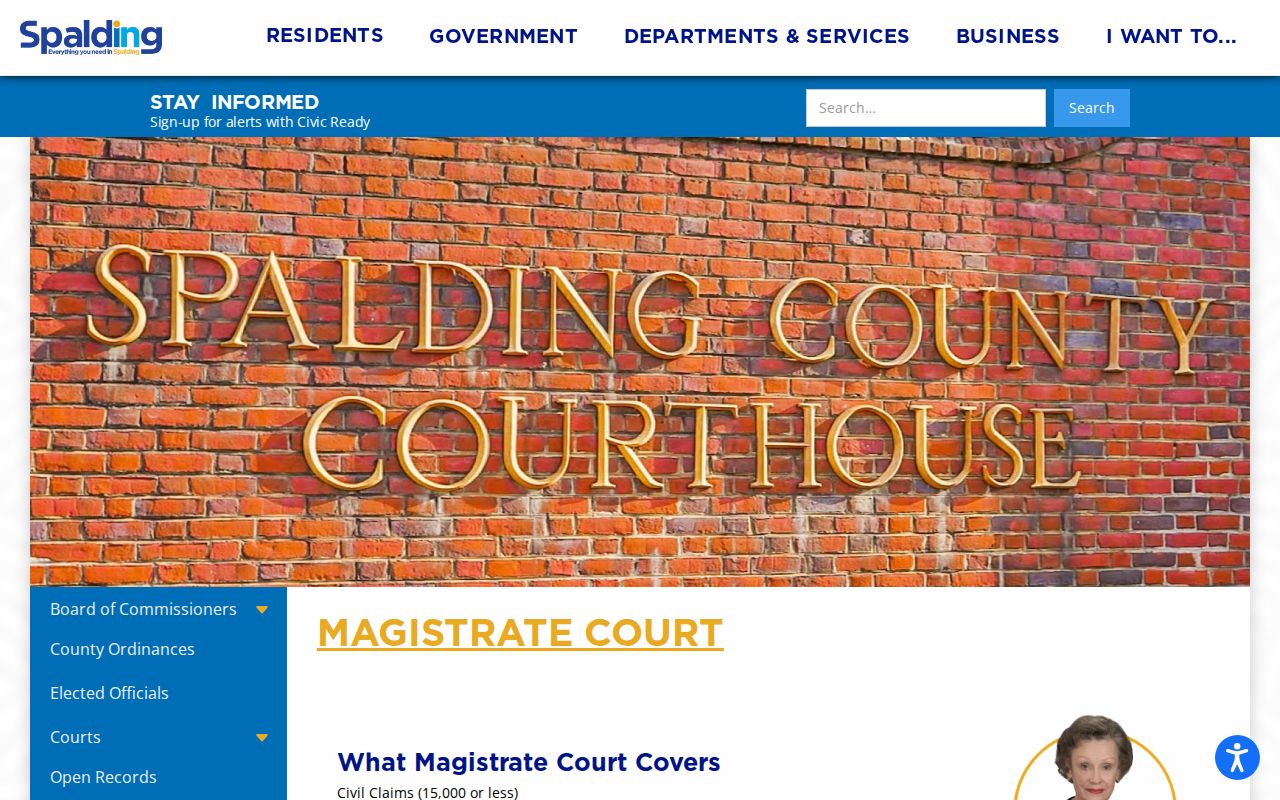
Those forms explain the split. A Magistrate civil file will not surface in a citation-payment search just because both services run on Tyler technology.
Civil Dockets: What They Show
A Spalding County civil docket lists events in order. An index may show that a complaint, return, motion, or order was filed while keeping the full image out of free view. The re:SearchGA guide treats case details, parties, attorneys, judicial officers, filings, documents, and hearings as separate layers, so read each one on its own. Remember the limits. A filed motion is a request, not a ruling. A hearing is not a judgment.
| Case number and type | The court identifier and civil category. |
|---|---|
| Parties and counsel | Plaintiff, defendant, petitioner, respondent, and attorneys. |
| Filings | Complaint, summons, answer, counterclaim, motions, and indexed documents. |
| Service | Summons and return events, separate from filing. |
| Hearings and orders | Settings, continuances, directions, and rulings. |
| Disposition | The recorded resolution, subject to later activity or appeal. |
Older cases, restrictions, and user-role limits can all shrink what appears on screen. A title proves an index entry exists, not that the image is open or certified.
Spalding Civil E-File Versus Search
Odyssey eFileGA and re:SearchGA do different jobs. The first one files. Odyssey submits pleadings into participating Spalding Superior and State workflows, calculates filing fees during the transaction, sends status notices, and returns a file-stamped copy after acceptance. Re:SearchGA is the case-search side. Having an Odyssey account does not unlock every document in someone else's case. The Odyssey eFileGA service explains the Georgia filing workflow.
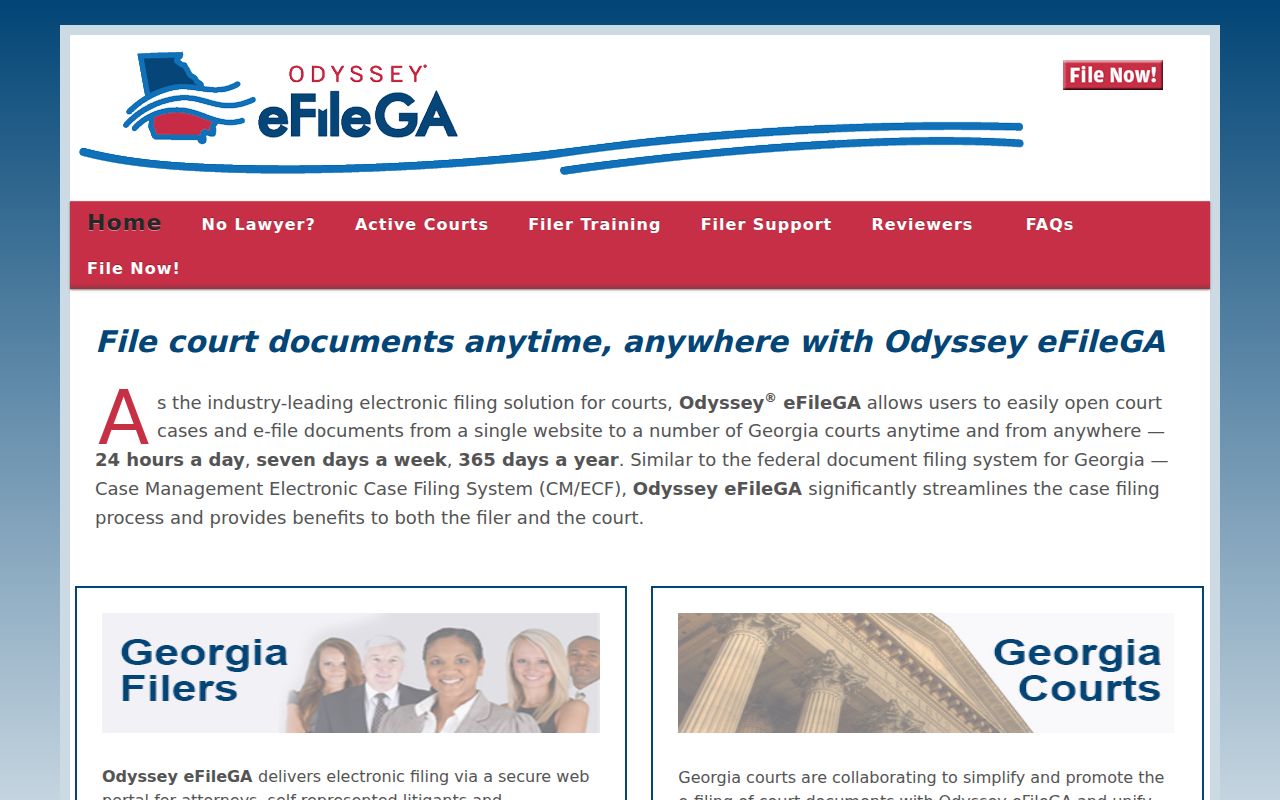
That service page shows the filing side, where acceptance and rejection notices matter most. It is not a public docket result.
Key distinction: “E-filed” describes submission. “Searchable” describes what an index or authorized account can retrieve.
What Cases Fill the Civil Docket
Spalding County civil dockets hold contract and tort claims. They also carry property disputes, domestic-relations cases, small claims, and statutory proceedings. Superior Court keeps the divorce, custody, and title-to-land matters. State Court can take civil cases outside the Superior-exclusive subjects. Magistrate Court handles smaller claims and the specific proceedings its jurisdiction names.
- Contract, debt, damages, and tort complaints
- Divorce, custody, and land-title cases in Superior Court
- Claims of $15,000 or less in Magistrate Court
- Dispossessory, garnishment, abandoned-vehicle, and personal-property proceedings
- Answers, motions, settlement entries, judgments, executions, and appeals
A deed, UCC filing, tax record, business registration, or Probate estate index is not a lawsuit docket. A federal civil action lives in PACER, not re:SearchGA.
Spalding Civil Filing Is Not Service
Here is a common docket mistake. Reading the complaint's filing date as proof the other side got it is one of them. Filing, issuance of summons, service, and return of service are separate events. The return reports how service was completed. An answer deadline may hinge on service and the governing procedure. It does not turn on the oldest date online.
- Complaint or petition
- The document beginning the request for relief.
- Summons
- Notice directing a party to answer or appear.
- Service
- Formal delivery of required papers.
- Return of service
- The filed report describing completion or attempted completion.
- Answer
- The responsive pleading.
Read those entries in order. If timing affects an obligation, check the filed documents, the current rule, or qualified counsel instead of computing from a summary screen.
Hearings on the Civil Docket
A hearing entry may list a date, type, judicial officer, or related order. That does not make it the trial. A civil file can carry motion hearings, status conferences, and scheduling events. Mediation entries and trials sit alongside them. A continuance pushes a setting back. A reset supplies the new date. Neither one means dismissal.
Check the latest notice or order, then compare it with the online case details. When a general web page differs from the printed notice, the notice controls. Spalding County publishes no countywide public calendar export, and no same-day refresh is guaranteed. With a date close by, or with sources in conflict, call the clerk. The Spalding County Court Schedule walks through the fuller settings workflow.
Note: A filed date labels a document event; it is not a hearing date.
Spalding Civil Clerk Channels
The Clerk of Superior and State Courts keeps those Spalding County registers. It routes requests by department. For a State or Superior civil file, the civil department is the direct contact. Staff can explain inspection, copy, certification, and fee procedures. The directory warns the office will not run unlimited record searches. Bring a case number, party names, a date range, and the exact document whenever you can.
Superior and State Clerk
132 E. Solomon Street
Griffin, GA 30223
Civil: (770) 467-4746
Monday through Friday, 8 a.m. to 5 p.m.
Magistrate Civil Clerk
132 E. Solomon Street
Griffin, GA 30223
Civil: (770) 467-4321
Ask about Magistrate files, forms, inspection, and copies.
Mail for the Superior and State clerk goes to P.O. Box 1046, Griffin, GA 30224. Confirm the required format before sending. The clerk's office sets its own terminal, turnaround, and copy-fee terms for civil court records, so no single figure applies to every request.
Spalding Civil Docket Copy Requests
An online summary or image is not automatically certified. If you need an authenticated record for a Spalding County civil docket, name the exact case, document, and court. State that certification is required. Ask the clerk for the current fee and delivery options. Spalding publishes an instrument-specific fee schedule, but no universal amount covers every civil copy request.
- Record the court and case number.
- Name the judgment, order, complaint, or docket sheet needed.
- State whether inspection, ordinary copy, file-stamped copy, or certified copy is wanted.
- Confirm charges, payment, delivery, and access limits with the custodian.
Need agency records instead of a court-file copy? File through the county JustFOIA portal. It does not bypass sealing, restriction, or certification rules.
Who Can See Civil Dockets
Georgia starts from open access to court files. That does not mean every document or personal identifier is public. A judge may limit access, and redactions are common. Some images depend on account role or purchase, and sealed material may be missing or only partly indexed. So a blank docket search is not proof that a Spalding County case never existed.
Key access rules:
Uniform Superior Court Rule 21 sets the public-file baseline and restriction process.
O.C.G.A. § 50-18-71 addresses administrative inspection, retrieval charges, and copying.
O.C.G.A. § 9-11-7.1 requires protected identifiers to be limited or redacted.
O.C.G.A. § 15-5-112 provides targeted identifying-information restrictions.
When a docket search comes up empty, check the court and the spelling first. Try the case number, consider Magistrate, Probate, juvenile, municipal, sealed, or federal lanes, then call the clerk who holds the record.
Spalding Civil Filing Status Trail
Electronic filing leaves its own status trail. A filer picks a case or a permitted initiation workflow, uploads the document, handles service choices, and then waits for status messages. Rejection is not an accepted docket filing. Keep the notice and your returned file-stamped copy. The Odyssey eFileGA application is the filing gateway for participating Spalding Superior and State matters.
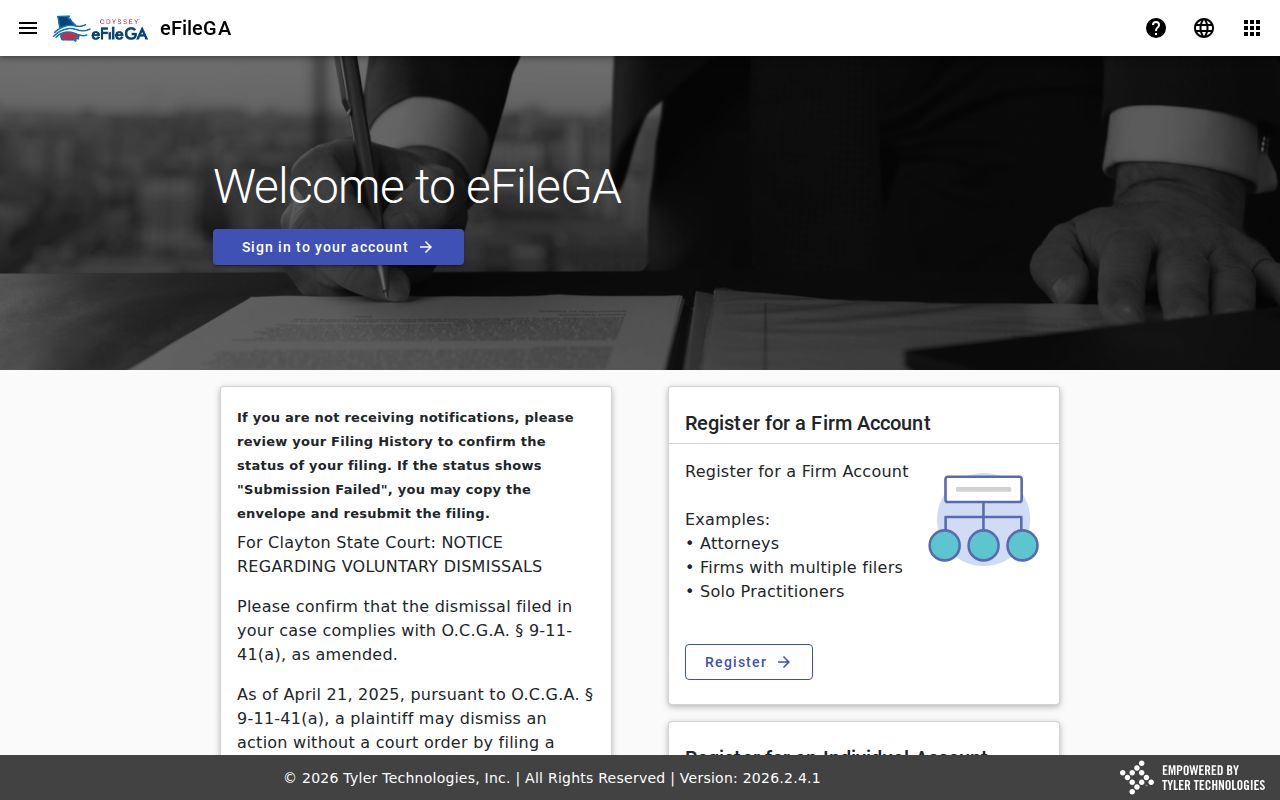
The application only matters at submission. Once the clerk accepts your filing, use docket search and clerk channels to confirm what the civil register shows.